FTC Disclosure: As an Amazon associate, I earn from qualifying purchases. This post may contain affiliate links, meaning if you decide to make a purchase via my links, I may earn a commission at no additional cost to you.

Finding the Right Fit: A Guide to Riding Breeches for Equestrians
Well-fitting riding breeches play an important role in comfort, effectiveness, and confidence in the saddle. Regardless of discipline, breeches should support correct position, allow freedom of movement, and remain comfortable through a full ride. Understanding how they are meant to fit—and how different design elements affect performance—can make the search for the right pair far more straightforward.
How Riding Breeches Should Feel
Breeches should fit closely to the body without restricting movement. Unlike everyday leggings or pants, they are designed to move with the rider in both seated and light positions.
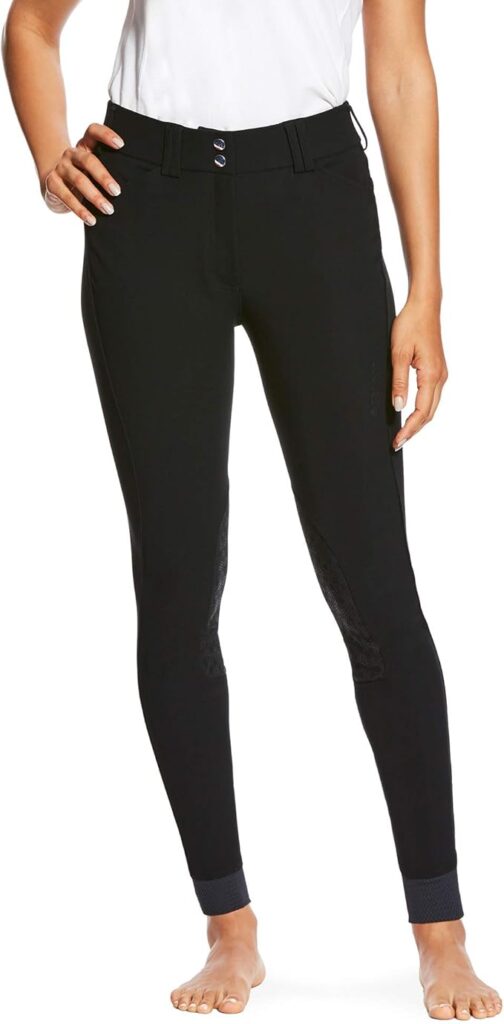
When trying breeches on, they should:
- Feel snug but not tight
- Allow full range of motion through the hips and knees
- Sit smoothly without excess fabric or pressure points
If breeches feel loose or overly relaxed while standing, they may stretch too much once ridden in.
Personal note: I LOVE Ariat breeches. They’re durable, moisture-wicking, and proven to last in the wash. Not to mention, they keep me secure and confident in the saddle for reasonable price.
Waistband and Rise: Foundation of Fit
The waistband is one of the most important indicators of proper fit.
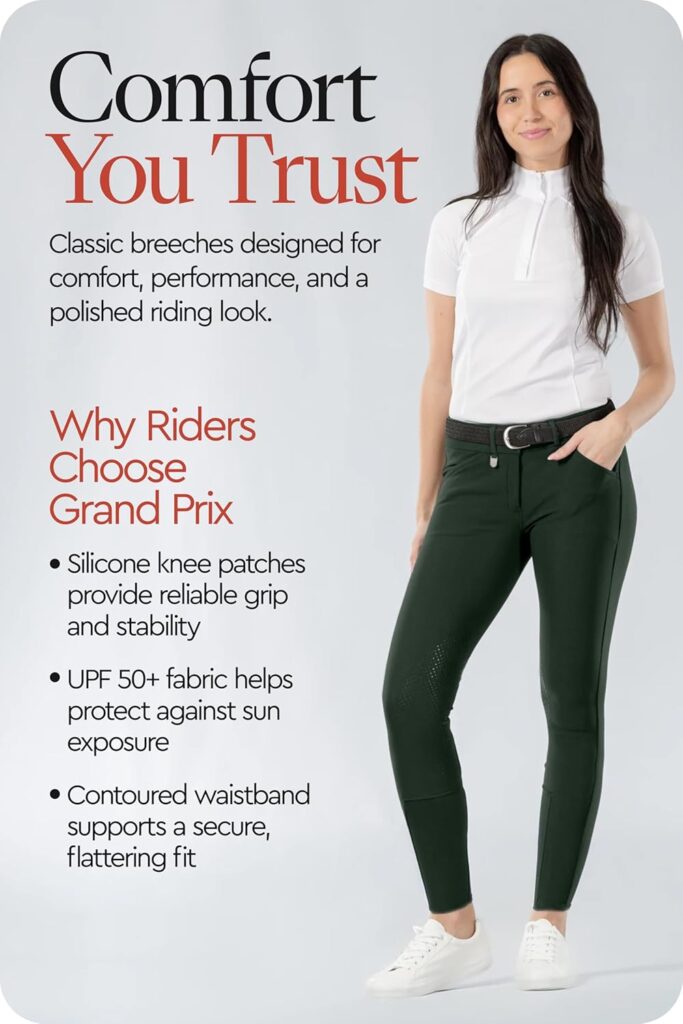
Look for:
- A waistband that lies flat against the body
- No gaping at the back when bending or sitting
- A rise that stays in place throughout the ride
Many riders find that mid- to high-rise breeches offer better stability and coverage, particularly during transitions between positions.
The Horze Grand Prix breech is known for a comfortable waistband. Many of us keep our breeches on long after the ride ends, so finding a breech that stays comfortable for hours is important.
Seat and Hip Fit: Comfort in Motion
The rise and seat should allow the rider to sit deeply without pulling or discomfort.
If the rise is too short, riders may experience pressure or restriction when sitting. If it is too long, excess fabric can collect in the seat, affecting comfort and contact with the saddle.
A simple way to assess this is to sit on a chair or bench and then move into a light seat position. Breeches that fit correctly should move smoothly with the body.
Leg Fit: Smooth and Supportive
Breeches should fit closely through the thigh and knee, with minimal excess fabric.
Pay attention to:
- A smooth fit along the thigh
- No bunching behind the knee
- A comfortable, secure fit at the calf
Excess fabric can cause rubbing under boots, while overly tight breeches may limit movement or circulation during longer rides.
Knee Patch vs. Full Seat
Grip style can influence both feel and fit.
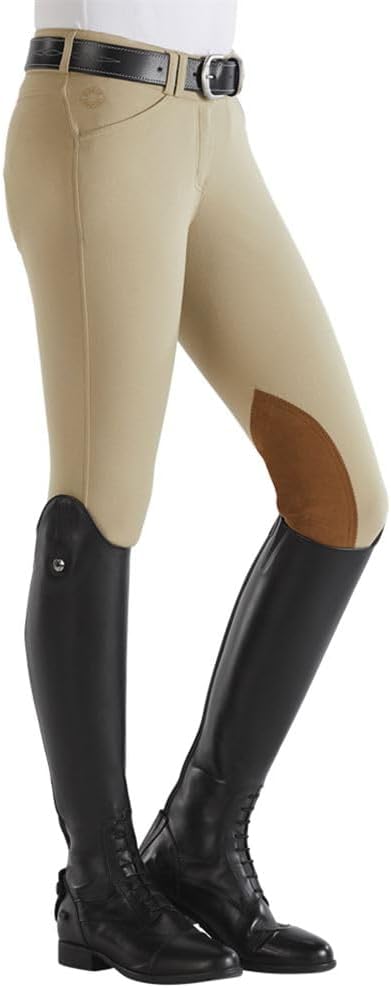
- Knee patch breeches allow greater freedom of movement and are a popular all-purpose option.
- For the newer riders out there, who aren’t looking to break the bank– I highly recommend the Dover Saddlery Ladies’ Knee Patch Breech. I have pairs of these that have lasted five or more years.
- Full seat breeches provide additional stability in the saddle and are often chosen for flatwork or riders who prefer more security.
Modern silicone grips are typically lighter and more flexible than traditional suede, which can feel bulkier for some riders.
Fabric Considerations
Fabric choice plays a significant role in overall fit and longevity.
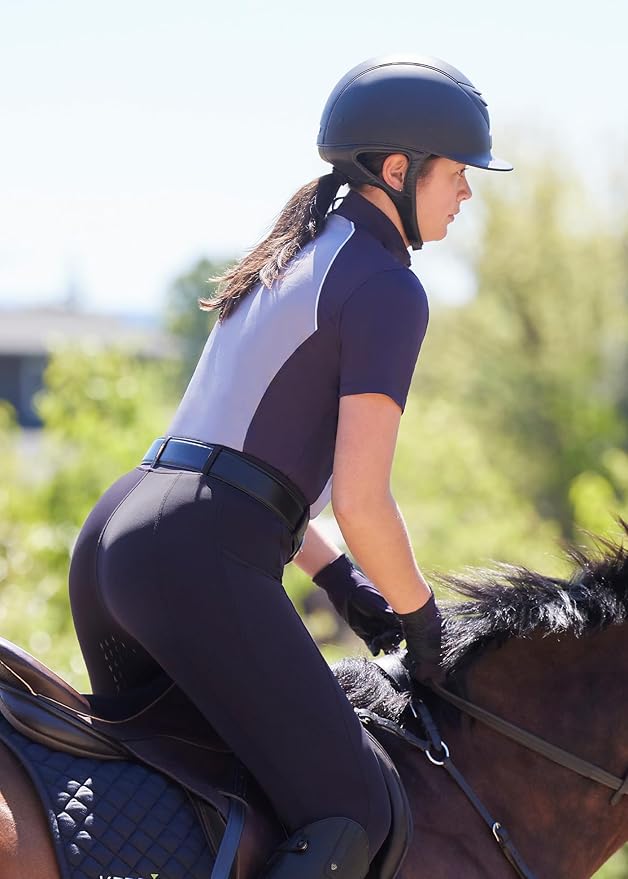
Look for:
- Four-way stretch for ease of movement
- Breathable, moisture-wicking materials
- Fabrics that maintain their shape after repeated wear and washing
Quality breeches should retain their fit over time rather than stretching out after a single ride.
For the younger riders or the amateurs who love a lightweight, stretchy type of breeches, I recommend the Kerrits brand.
Evaluating Fit in the Saddle
Whenever possible, test breeches while riding.
Consider:
- Do they stay in place through transitions?
- Is movement unrestricted in both seated and light positions?
- Do they remain comfortable for the duration of the ride?
Breeches that fit well should fade into the background once riding begins.
Conclusion
Finding the right riding breeches is less about size labels and more about how they function in motion. By paying attention to waistband stability, seat and leg fit, fabric performance, and overall comfort, equestrians can select breeches that support effective riding and long-term comfort in the saddle.